

“Children are the ways that the world begins again and again. If you fasten upon that concept of their promise, you will have trouble finding anything more awesome, and also anything more extraordinarily exhilarating, than the opportunity or/and the obligation to nurture a child into his or her own freedom.” - June Jordan
The reality of becoming a mother didn’t truly hit me until about the sixth week of postpartum, when I saw my son look at his own hands. He stared at them like an artist drawing a still life–taking in every line and shadow with a preciousness that made me understand the idea of a blank canvas in a whole new way. Then he looked at me with a deep stare that showed me a reality I was not prepared for: not only was I keeping this beautiful baby alive, but I was also shaping his entire world.
Working at CCI’s Research to Impact Lab (R2i Lab) for the past four years made me think I was prepared for America’s piecemeal lack of support for families during this season of life. Living it is a completely different experience. Juggling Post-Partum Depression (PPD), a newborn, and physical disabilities from labor, all while trying to understand the archaic website of the state’s Employee Development Department, was its own special version of hell– and somehow California, where I live, has one of the most generous maternity leave programs in the country. I never felt the need for a village more– and yet, I, like many birthing people, was alone. It is no wonder that, on average, 1 in 8 birthing people experience PPD in America (Langdon and Carberg), with an estimated 50% of cases remaining undiagnosed due to cultural stigma (Carlson and Azhar).
While I was shocked by the reality of just how truly bad America’s system of support for parents is, it did not shift my point of view and identity as the following discoveries have. Surprisingly, the most influential learnings from my matrescence are rooted in many of the ideas we work with at CCI – culture and systems change.
America’s Culture of Independence and Hyper-Individualism Starts on Day One
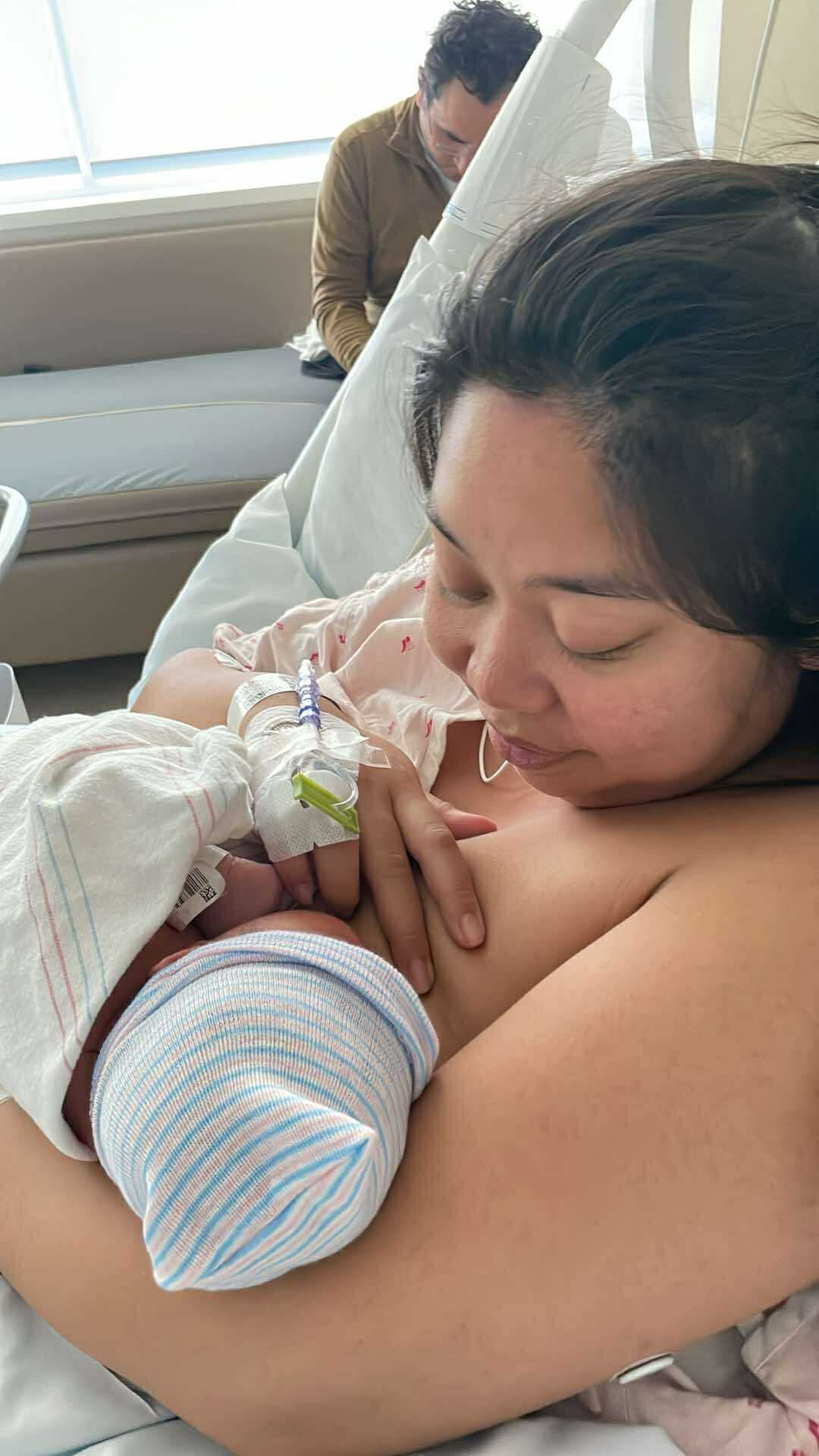
Motherhood has shown me that independence and hyper-individualism start as early as when parents are told not to hold their babies too much and are encouraged to sleep train. It continues in the form of a threat that somehow if your child becomes “dependent” on you, you have failed to ready them to pull up their bootstraps and work hard for individual success in America. At R2i Lab, we often find ourselves fighting against the loneliness America normalizes as “independence” through convenings and investing in relational infrastructure. Just as we aim to support innovations that center on mutualism and collective future-building, it dawned on me how deeply rooted this individualist culture battle is in America, as the indoctrination of independence and individualism begins as early as infancy.
Policy Failures Feel Like Personal Ones
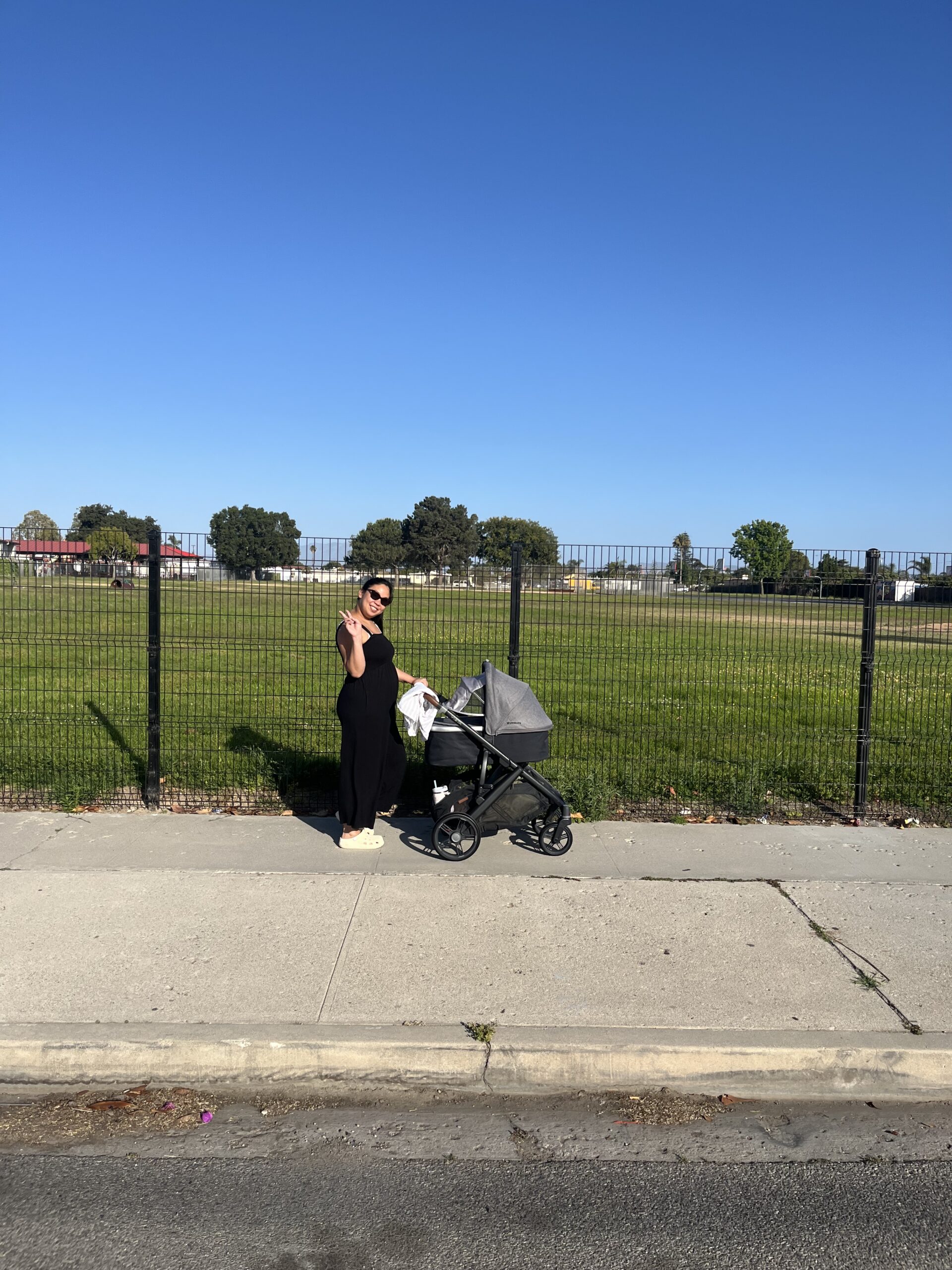
For both artists and families, the sad reality is that we often blame ourselves for what are actually policy failures. We think: if we could only manage our time better, then we would be better parents or finally have time to create our artwork. Becoming a mother made me see just how much policy failures are disguised with narratives that put the onus on us. With the median annual cost of full-time child care for a preschool-age child ranging between $9,000 and $24,000 and for infant care, ranging between $11,000 and $29,000, (Danielson et al.) it is not our fault that childcare is so expensive or that the workday ends hours after the school day. There is no amount of girlboss-ing possible for us to “have it all.”
It Takes a Village, Not a Family
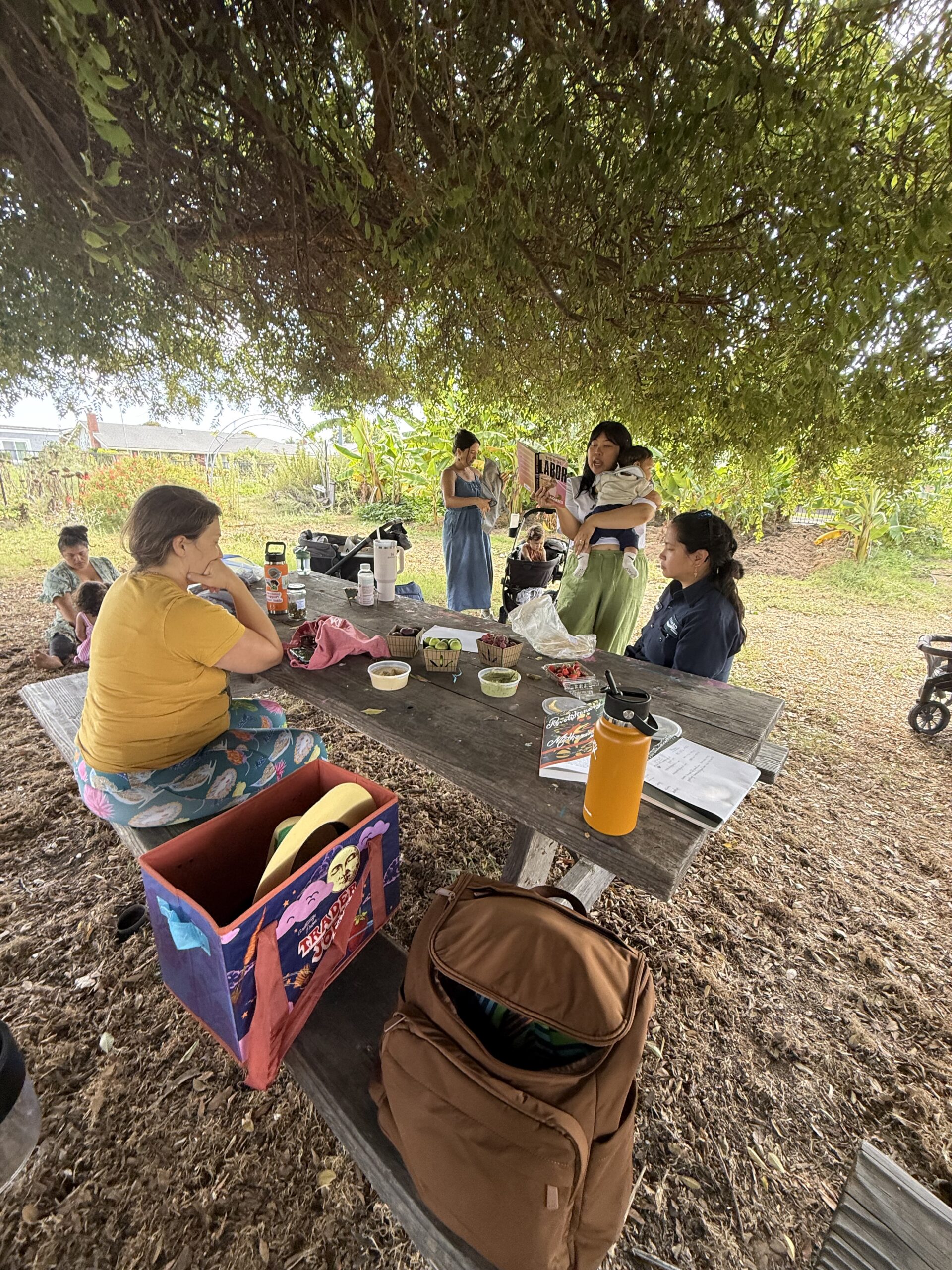
American individualist culture extends from a single person to the creation of the nuclear family, which shoulders what villages used to provide. Systems that prioritize nuclear families created fences where shared resources used to be, replaced intergenerational support with paid nursing homes and nannies, and collectivism with independence. Motherhood has taught me that isolating people into nuclear families is a tool, and that community is the answer. A tool for what, you might ask? Isolation keeps people from organizing for change. This is true for the crushing weight of responsibility that keeps families struggling in isolation, and it is true for many of the movements we seek to support at R2i Lab. For this reason, we approach our work through a lens beyond issues that only impact artists, but instead to all workers experiencing gig-working conditions. Community and connecting on shared struggles are the bridge that turns isolated pain into a fight for justice.
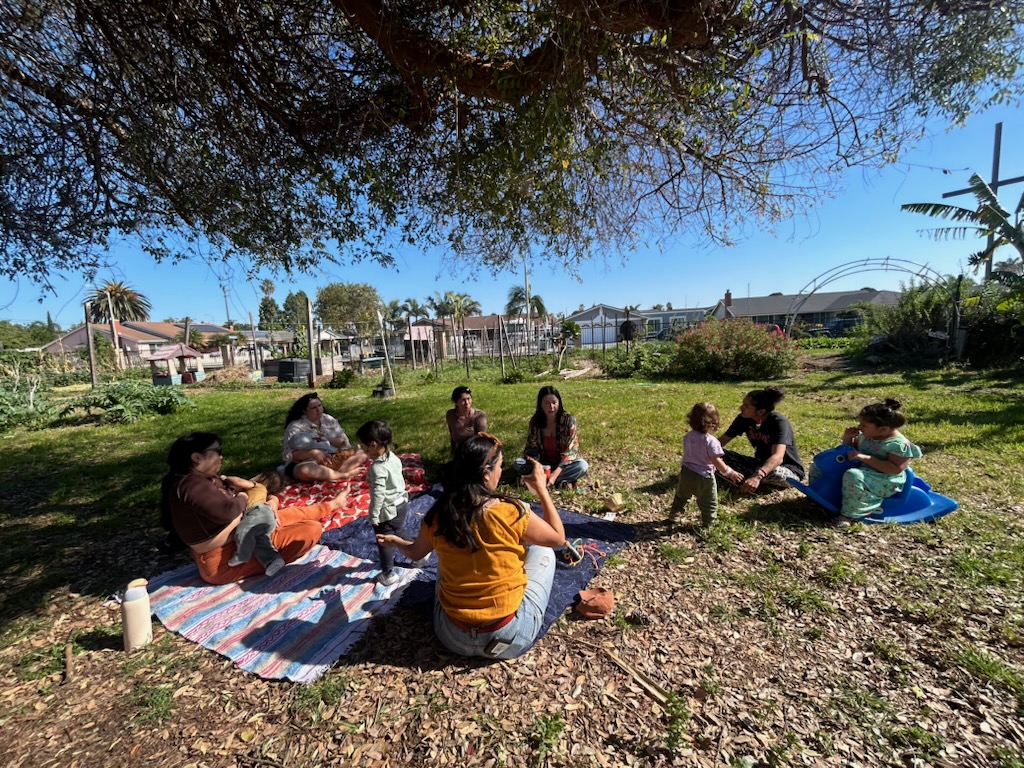
Three months into my PPD, I started the Circle for Radical Mothering 1 a group for birthing people to build the village they deserve, grounded in values of feminism, social justice, and decolonization. This group provides me with a dedicated space to live my values and mother in a way that breaks from America’s dominant culture.
To Be Able to Imagine Yourself Out of the Current System, You Must Remove Yourself From It
Finally, one of the most difficult-to-swallow learnings from my matresence is the importance of removing oneself from the systems you’re trying to dismantle in order to imagine possibilities outside of them. Why was this reflection particularly important for me at this moment? Because it helped me come to a difficult personal decision of my own.
When the time came to return to work, I sat with the learnings I’ve just shared, and I perceived two paths in front of me: one in which I leap back into the urgency of capitalism and hand my son off in the name of “American independence”, or I could try a different path, unknown to me and grounded in experimentation. I decided to take the opportunity to shape my son’s world into one I have been fighting to build. As of February 2026, I stepped away from my full-time role as Program Officer, Research to Impact Lab, and into an as-needed part-time Special Projects Officer, Research to Impact Lab. I am grateful for my colleague’s collaboration and support as I explore the path of embodied activism through my mothering.
At CCI, we aim to support “worldbuilding,” a term that describes how many of our grantees work to build the world they want in the face of a current world built on histories and systems of power that actively work to erase them. In this new chapter, I aim to embody worldbuilding through my mothering, grounding my son’s early world in connection over isolation, collective futures over independent success, and slowness in the face of urgency. Coming to this decision was not easy, and took plenty of internal reflection and interrogation for what it would take to do this, such as leaning on my community, unlearning how I see my worth, and embracing the unknown.
My learnings and my own personal choice have led me to what I never thought: being primarily a stay-at-home parent. However, I am not here to advocate for all parents to stay at home with their children. I’m advocating for a culture that values the time and labor it takes to raise children, and for policies that allow people to do so intentionally and in community, should they choose to. My hope is also to showcase the role culture plays in our collective fight towards justice.
As I settle into this new relationship with CCI, I look forward to continued experimentation and to welcoming our next Program Officer for Research to Impact Lab. The relationships I’ve made and nurtured during my time in this program have had a profound impact on my personal activism and will continue to inspire me as I support both this program and my new identity as a mother.
1Revolutionary Mothering: Love on the Front Lines defines and reclaims the term “mothering” not as a biological act, but as a crucial, subversive, and collective social practice that works to dismantle capitalism, racism, and patriarchy. It is distinctly different from “motherhood” and is an action people of all gender identities perform. The term has also been reclaimed in Audre Lorde’s essay, “Eye to Eye: Black Women, Hatred, and Anger” where she asserts the need to mother ourselves as a way to expand the verb to encompass the act of reparenting oneself.
Works Cited
Carlson, Karen, and Yusra Azhar. “Perinatal Depression – StatPearls – NCBI Bookshelf.” NCBI, National Library of Medicine, https://www.ncbi.nlm.nih.gov/books/NBK519070/. Accessed 15 March 2026.
Danielson, Caroline, et al. “California’s Changing Child Care Landscape: Understanding Costs and Supply.” PPIC, 1 August 2025, https://www.ppic.org/publication/californias-changing-child-care-landscape-understanding-costs-and-supply/. Accessed 15 March 2026.
Langdon, Kimberly, and Jenna Carberg. “Postpartum Depression Statistics (2025) | PPD Research & Data.” Postpartum Depression, 4 August 2025, https://www.postpartumdepression.org/resources/statistics/. Accessed 15 March 2026.