

Supporting Confident Creativity
Stanford and CCI Partner to Help Creatives with their Copyright Claims
For the vast majority of artists, some interaction with technology is not only unavoidable - it is necessary to rapidly create, produce and disseminate work as well as to ensure compensation. From blockchain to NFTs to Etsy, creatives use technology to connect directly with those who support their artwork. However, such technologies have also made it incredibly easy for that artwork to be pirated or misattributed. To protect their livelihoods, artists must learn how to protect their work from copyright infringement, as well as other lesser-known copyright claims that can impact an artist’s livelihood such as noninfringement and misrepresentation. The Copyright Claims Board (CCB) was created to make this process easier and less expensive for the average creator.
The Copyright Claims Board (CCB) was established in 2020 by Congress to answer an urgent need - the large volume of copyright claims and the limited amount of resources (time, expertise, money) available to creators to make those claims in federal court. The CCB consists of an entirely online process led by a three-member tribunal with extensive expertise in copyright law. The goal is a more efficient, less expensive alternative to federal court for copyright claims of less than $30,000.
And yet, like any bureaucratic process, this one can be challenging for those without an understanding of intellectual property law. CCI felt that it was critical to create a resource specifically for creatives so that they might learn how to navigate the CCB to protect their intellectual property rights. Through a partnership with the incredible students and staff of Stanford University’s Juelsgaard Intellectual Property and Innovation Clinics, we have created a live online resource for creatives to confidently navigate the CCB called Navigating the Copyright Claims Board: A Practical Guide for Creators!
What makes Navigating the Copyright Claims Board: A Practical Guide for Creators so special? Our Juelsgaard Clinic students found that since opening, the CCB has only seen a success rate of 1.5% of claims reaching a final decision (that is only 12 claims out of 721 filed).
This jaw-dropping number sparked our interest - how is it possible that a public resource set up to encourage independent creatives to take control of their IP should see such a dismal success rate? Our hope is that with this more accessible and interactive guide, artists and creative workers will feel more confident in their copyright claims.
To celebrate the release of this resource, please join us for the following activities:
-
- Confidently Informed: Navigating the Copyright Claims Board for Creatives on Thursday, June 6: a virtual workshop with the authors of the resource, Caitlin Cary Burke, Juelsgaard Clinic Member, Stanford J.D/PhD Candidate, 2025; and Kiran Wattamwar, Juelsgaard Clinic Member, Stanford J.D Candidate, 2025. Participants will get a tour of the guide and the chance to ask its authors any questions they might have about copyright protections. Register here!
- Confidently Registered: a Copyright Registration Party! on Thursday, June 20. CCI will host a virtual registration party! Register your copyright online with the Copyright Office. CCI staff will be on hand to assist you through the process. Register here!
- Share Your Story! Are you an artist or creative worker who has dealt with an issue related to copyright? If so, then share your story with us below! We’ll add it to a story bank to help us understand how we can support creatives with their copyright issues.
- Ongoing Activities. CCI will host resources and gatherings related to the needs of artists and in response to the research. Interested in partnering on this initiative? Contact Jennelyn Bailon at jennelyn@cciarts.org
CCI would like to thank the team from Stanford for making this resource possible:
Caitlin Cary Burke, Juelsgaard Clinic Member, Stanford J.D/PhD Candidate, 2025
Kiran Wattamwar, Juelsgaard Clinic Member, Stanford J.D Candidate, 2025
Phil Malone, Director of Juelsgaard Intellectual Property and Innovation Clinic, Mills Legal Clinic, Stanford Law School
Nina Srejovic, Clinical Supervising Attorney and Lecturer, Juelsgaard Intellectual Property and Innovation Clinic
Navigating the Copyright Claims Board: A Practical Guide for Creators would not have been possible without the support of the William & Flora Hewlett Foundation and the Kenneth Rainin Foundation

A Change in Name
A Change in Name
We are in the process of landing on the new name (hopefully, third time’s the charm).
In March 2023, we changed this program’s name from Rustle Lab to Sol Center for Liberated Work. As our work grew, Rustle Lab didn’t do enough to reflect our aspirations. In selecting the Sol Center name, we hoped to embed our aspirations for this work directly into the identity of the program itself. For us, Sol represented the energy of the sun to fuel new life and ecosystems. As a Spanish word, we felt it honored the immigrant and marginalized communities we hope to work alongside, as well as our California home. And it formed the root of other words that reflect the program’s priorities – solutions, solidarity, and solo workers.

Meanwhile, Liberated Work encapsulated our world-building ambitions. For us, liberated work was about self-determination by creating new systems that no longer equate “work” with “worth”; where the jobs we do to earn money do not dictate access to benefits, security, time to rest, or possibilities for the future. Liberated work is not just about how we pay our bills, but also the work we do to care for our families, participate in our communities, and freely express artistically and culturally.
When we rolled out the new name, however, we heard that it wasn’t landing in the ways we hoped. For some, Sol was too easily understood as Soul, and the deep cultural resonance that term holds for Black communities. In addition, Liberated Work was less understood as our stance on labor issues and, instead, perceived as borrowing too heavily from the language of Black Liberation movements. For others, the Spanish word Sol felt appropriating in the absence of LatinX leadership within our program.
As an arts and culture organization, we know that language and representation matter, so we have taken critical responses seriously. We are grateful for those who shared their honest reactions, all of which were shared and received as acts of solidarity and support. Hence, we are changing the program’s name and, in this process, being more deliberate and thoughtful about our intentions and how we show up.
We are in the process of landing on the new name (hopefully, third time’s the charm). If you would like to offer suggestions (we see you, creatives!), please take a look around our site, read what we’re up to, and email us ideas at solcenter@cciarts.org. No prizes awarded except the glow of knowing you are helping an endeavor that is meant to help you!
Imagining Social Protections for All
Imagining Social Protections for All
Bringing together worker advocates and movement leaders to imagine new systems of protection
Althea Erickson
Althea Erickson is the Director of the Sol Center for Liberated Work, a program of the Center for Cultural Innovation. Previously, Althea was the Vice President of Global Government Affairs and Impact at Etsy, and Advocacy & Policy Director at Freelancers Union.
Sometimes when we’re living inside a system, it’s hard to imagine what an alternative could look like.
In our desire to make progress–to improve the way things work–we focus on a tweak here, a shift in implementation there. And to some extent, that can be a good and pragmatic strategy. But it has its downsides.
When we seek to fix the systems we live in, we may unintentionally reinforce and entrench ones that simply don’t work, and worse, undermine our hope of achieving more. For example, the U.S. social safety net excludes huge swaths of workers–domestic workers, farm workers, self-employed workers, sex workers, and undocumented workers, just to name a few. Some of these groups were explicitly excluded to appease Southern segregationists, while others were merely overlooked due to the nature of the economy at the time. To date, much of the effort to close those gaps has been to focused on expanding existing systems to new populations, for example including domestic workers in labor laws or excluded workers in unemployment insurance. But what if the 21st century work force simply doesn’t fit into 20th century systems?
What if we started fresh, and reimagined a set of social and economic protections that met the needs of today’s workforce, unencumbered by the past? And what if we started that conversation with the workers who have been erased from the conversation, yet are most excluded from today’s safety net? What types of protections might we imagine together? And wouldn’t that system be more likely to actually work for all?
Those questions underpinned Reimagining Social Protections for Independent and Other Traditionally Excluded Workers, a convening we co-hosted with the Urban Institute in December 2022. The convening brought together worker advocates representing nontraditional workers from across a wide swath of sectors–domestic workers, migrant workers, temp workers, street vendors, migrant workers, sex workers, and more. Together, we set aside the constraints of today’s systems, and gave ourselves permission to imagine an alternative vision of economic security for today’s workforce, to dream beyond barriers of all kinds.
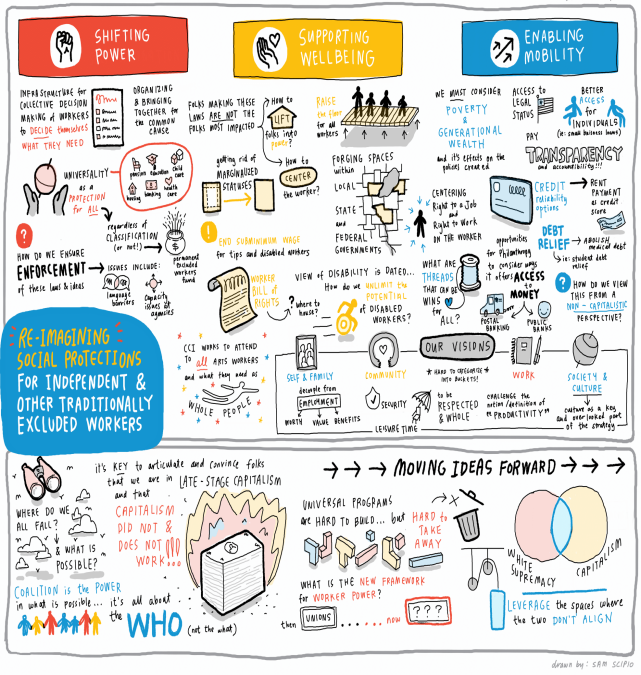
The ideas that garnered widespread support were pretty inspiring, and start to paint the picture, and the true possibility, of an alternative system of protections that isn’t contingent on your specific job or identity as a worker, but is guaranteed to you, as a human. In particular, attendees imagined:
-
-
- Widespread adoption of guaranteed income and other cash transfer programs that offer a floor of protections for all workers regardless of employment status
-
- Improvement of key social insurance programs, including healthcare, unemployment insurance, and retirement to make them affordable, portable, and universally available to everyone, regardless of their employment status
-
- The establishment of a national worker bill of rights that would apply to all workers, regardless of sector, occupation, or employment status
-
- Robust enforcement of labor laws and worker protections across all sectors
- Exploration of new models for building and wielding collective power, like sectoral bargaining
-
Driving the discussion were some core ideas – and really cultural and narrative shifts – that we, as a society, need to grapple with.
-
-
- We need to decouple work from worth.
-
- All people deserve dignity.
-
- We are full humans deserving support, not just in the narrow confines of our identities as workers.
-
- Our labor is more than the labor we do to earn income. It is the labor we do to support our families, to strengthen our communities, and to express ourselves that makes life worth living.
- A just society recognizes the value of people as humans, and builds systems to support broader human flourishing.
-
As inspiring as the visioning was, at times participants raised the challenges that stand in the way of moving from the systems we have to the systems we want, especially given the current political forces shaping policy today. And yet, there was palpable energy in the room around building greater connectivity and connection across these groups, to build greater collective power between and among nontraditional workers across sectors.
Yes, the challenges are great, but if we can align ourselves around a shared vision, we can start to build bridges to get from here to there.
You can read the full summary of the convening here. We, of course, welcome your voice in this ongoing conversation.
Convening Summary: Reimagining Social Protections For All
Convening Summary: Reimagining Social Protections For All
A Summary of the Virtual Convening on Reimagining Social Protections for Independent and Other Traditionally Excluded Workers
This December 2022 convening brought worker advocates and movement leaders together to reimagine social protections for all.
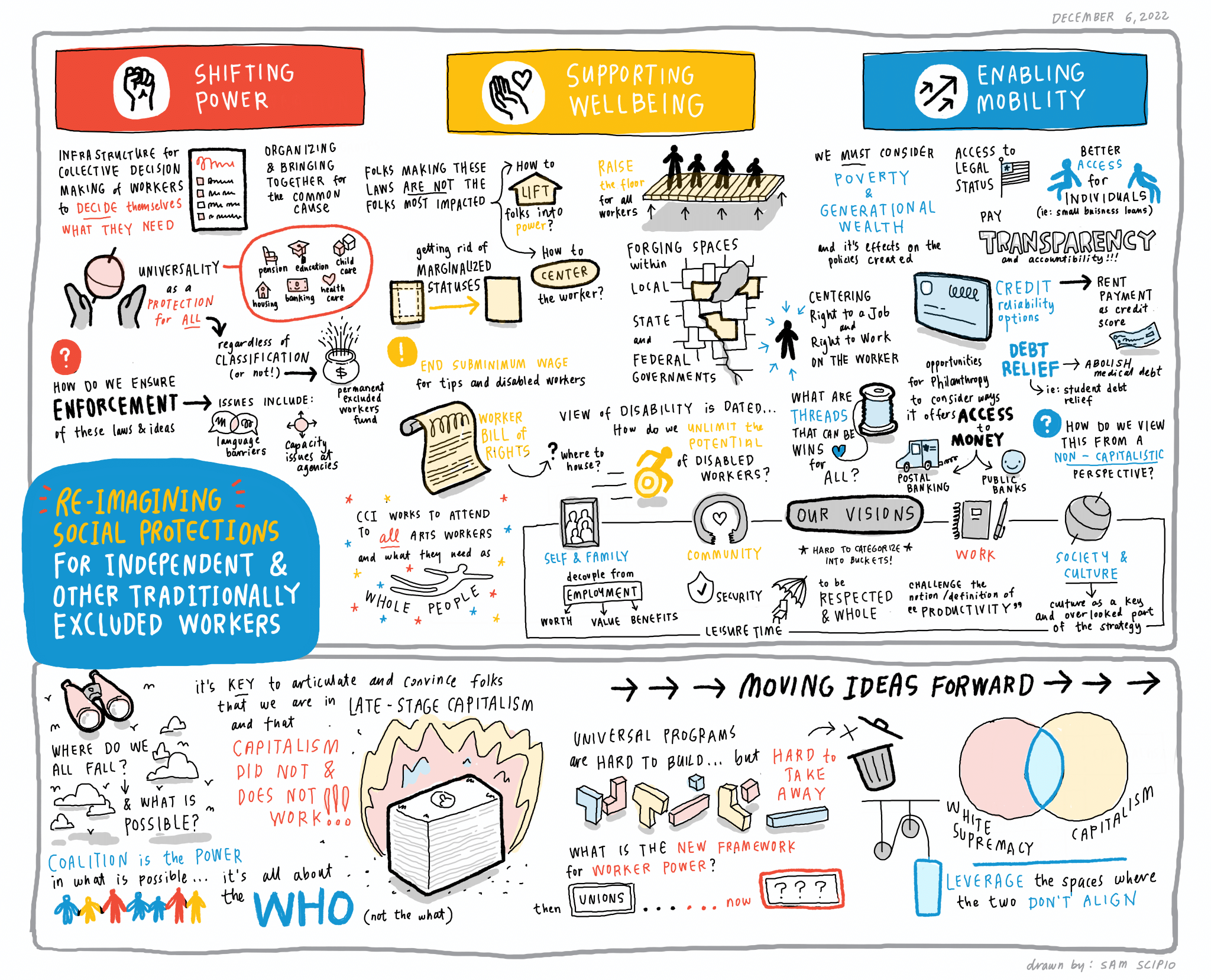
This summary describes the discussions at a virtual convening titled “Reimagining Social Protections for Independent and Other Traditionally Excluded Workers” and includes an artist's live visual notes taken during the event. We collaborated with the Urban Institute to host this convening in December 2022.
During this event, worker advocates, forward thinkers, and movement leaders imagined new systems of worker supports, protections, and power for those excluded from existing benefits and social protections, including independent contractors, temp workers, and workers in the arts.
What do gig workers really want?
What do gig workers really want?
We're thrilled to support new participatory research to find out.
Althea Erickson
Althea Erickson is the Director of the Sol Center for Liberated Work, a program of the Center for Cultural Innovation. Previously, Althea was the Vice President of Global Government Affairs and Impact at Etsy, and Advocacy & Policy Director at Freelancers Union.
For several years now, the conversation about gig work and the future of work has been hampered by the lack of good data.
Current measurements of the gig workforce are notoriously inconclusive and contradictory. Existing studies rely on conflicting definitions and overlapping terms (e.g., separating out or collapsing freelancers, contract workers, independent workers, itinerant workers, gig workers, etc.) that result in findings so disparate, they undermine the data’s usefulness and credibility.
Existing research also fails to capture the full diversity of gig workers across sectors. So often, the conversation focuses on app-based workers, but fails to consider informal workers, farm workers, street vendors, arts workers, and any number of other categories of non-traditional work who ALSO lack the benefits and protections tied to full time employment.
Moreover, existing research fails to uncover what workers say they need and what solutions they want. Ultimately, such data is necessary, not only to anchor any new effort to deliver benefits and protections outside of employment, but to build the political power that gig workers need to win them.

That’s why we’re thrilled to announce Sol Center’s first grant, to support the Gig Worker Learning Project, a participatory research project by The Workers Lab and the Aspen Institute Future of Work Initiative, seeking to understand gig workers’ needs and the solutions that will impact them most. The first phase of the project, which took place over 2022, included early stakeholder outreach and a landscape scan of existing gig workers research. The second phase will rely on participatory research methodology to develop a foundational understanding of gig workers’ most pressing challenges and identify solutions that workers feel would impact them personally.
Participatory research methods differ from traditional ones by positioning research subjects as collaborators and owners of the research process and data. In this, the Gig Worker Learning Project doesn’t just start with excluded and marginalized workers; it puts them in the driver's seat of research design, data collection, dissemination, and data ownership. The team will also build a cross-sector community of leaders, researchers, and worker organizations committed to gig and contract worker-centered knowledge, who can amplify findings and collectively frame their work from the perspective of gig workers.
Finally, and perhaps most importantly, the project will build infrastructure for power building across worker groups through a Participatory Research Toolkit that equips gig worker organizations with tools to collect ongoing data on workers’ lives. This data will bolster each organization’s ability to advocate on behalf of its members with policymakers, supporting their efforts to build political power. It will also form the basis of a larger national dataset about gig work, owned by gig worker groups.
In this, the project will build the infrastructure to enable cross-sectoral collaboration around a shared agenda for gig work, one rooted not in the perspectives of powerful interest groups, but in the perspectives of workers themselves. To the extent that the project will help create more open space in the debate, it will also equip worker organizations to fill it.
We couldn’t be more excited to support this project. Learn more about the work here!

Advocating for artists on the blockchain
Advocating for artists on the blockchain
Althea Erickson
Althea Erickson is the Director of the Sol Center for Liberated Work, a program of the Center for Cultural Innovation. Previously, Althea was the Vice President of Global Government Affairs and Impact at Etsy, and Advocacy & Policy Director at Freelancers Union.
Artists’ economic security depends on their ability to own and control their intellectual property rights, but they often lack the means or bargaining power to protect those rights.
For example, musicians often forgo rights to their work when signing record deals, while freelance writers must often sign contracts that give publishers full rights to their work in all forms in perpetuity. Unlike in many other countries, US visual artists don’t have a means to collect resale royalties on their work, even as those pieces grow in value over time.
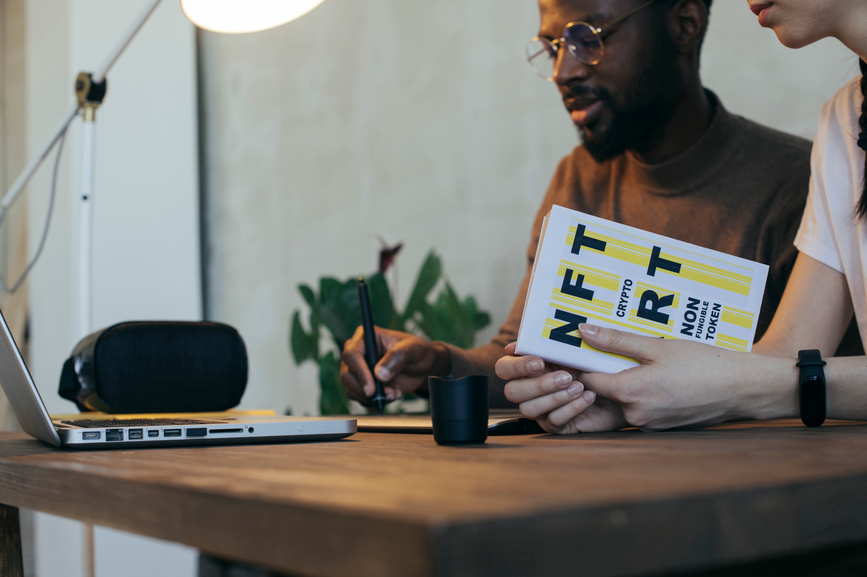
The blockchain offers exciting opportunities for artists to take more control over their work, and expands ways for them to earn income from that work. It allows for more direct connection between artists and their fans, circumventing traditional gatekeepers. Through smart contracts and the metadata associated with NFTs, artists can set and enforce the terms of their license agreements in their work, including enabling many to collect resale royalties for the first time.
Given the opportunities and lack of traditional gatekeepers, it’s not surprising that many Black and Brown artists and creatives moved quickly into the space. Black individuals have been at the forefront of participating, legitimizing, and shaping the development of blockchain-based financial markets, activities, community forums, and art. We follow the artists we serve where they go, which is why we started exploring and learning about the web3 space.
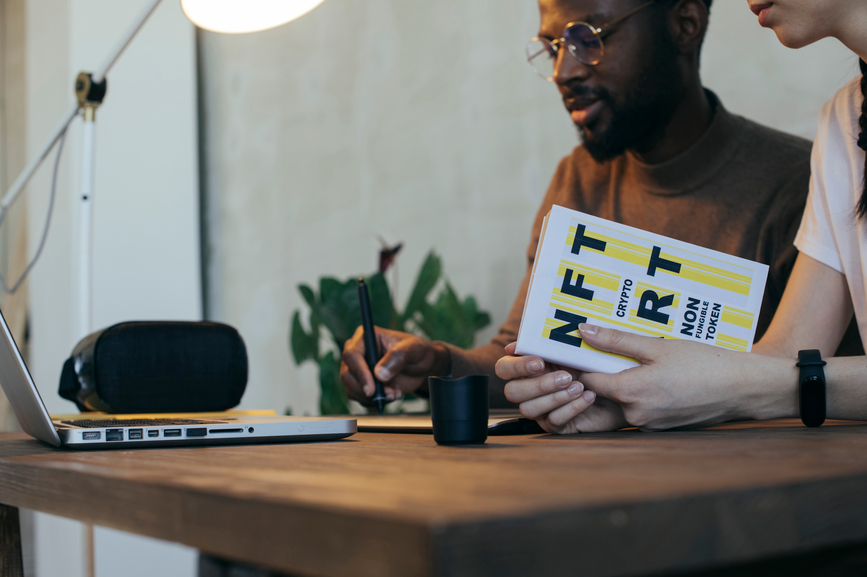
We quickly learned that while the opportunities are significant, so are the risks, especially when it comes to artists protecting themselves and their work. In particular, the platforms themselves have significant power to set and enforce terms, limiting the promise of true self-determination for creatives.
To truly capture the ownership opportunities the blockchain offers, artists moving into the space need tools and information to help them set and enforce their rights. That’s why we commissioned Alex Glancy at the law firm Gundzik Gundzik Heeger LLP to write a report on the legal issues artists face on the blockchain (report forthcoming).
Given our interest in the issue, we were excited to learn in late 2022 that the U.S. government had undertaken a study into the issues surrounding intellectual property and NFTs. Policymakers are exploring whether current intellectual property laws need to be updated or changed, given the new technology. The U.S. Senate Subcommittee on Intellectual Property requested that the US Copyright Office and US Patent and Trademark Office undertake a joint study exploring intellectual property issues and NFTs. As part of that study, the Offices requested written comments, as well as hosted several public roundtables on the topic.
We worked with other stakeholders from the arts community to collect feedback on the issues artists and creatives face in the NFT space, and collaborated with Alex to develop comments to the USPTO/USCO study. We also participated in one of the public roundtables the Copyright Office organized, advocating on behalf of the creatives CCI serves, especially those from marginalized communities. You can read our submission here, and watch the roundtable here.
In advocating for the arts workers and creatives we serve, we made four major points:
- Artists need better tools to understand and influence the ways NFT marketplace terms impact their intellectual property rights, including the ability to assess terms, determine licenses, as well as choose or change platforms
- There is significant legal uncertainty regarding the ways copyright law and contract law overlap on the blockchain, which creates copyright management and enforcement challenges for creators and inconsistencies in enforcement
- As is the case off the blockchain, small creators need education and technical assistance to help them protect and manage their intellectual property on the blockchain, in particular given the high barriers to informed entry in the market and the lack of trusted advisors, especially within marginalized communities
- While the blockchain offers ways small creators can support themselves via direct payments and resale royalties, we worry about their overdependence on too-few platforms that could potentially use their market power to strip artists of ownership of artwork, rights to reproduce, trademark, and other economic opportunities.
Yes, we’re excited about the opportunities blockchain technologies offer for arts workers to control and derive economic benefits from their work. However, lack of information, tools, support and means to exert collective power may undermine the potential of these technologies to help creators – especially creators from marginalized communities – achieve greater self-determination.
Contributing to this public study was just the first step we’re taking to advocate for artists' ownership rights in this space. In the days to come, we’ll be publishing the report drafted by Alex Glancy on legal issues artists face on the blockchain, sharing artists' experiences and challenges with lawmakers, and continuing to collaborate with our peers to uplift their voices in the public debate.
Have a story to share about your experience using blockchain technologies? We’d love to hear it here!