

Reflections from the Platform Cooperativism Conference in Istanbul
This story was originally published on Subvert’s blog https://subvert.fm/blog/reflections-from-the-platform-cooperativism-conference-in-istanbul/ on January 21, 2026
For those of you who don’t know, Subvert is part of a small corner of the tech world called “Platform Cooperatives”. The idea is that there are many different kinds of cooperatives: worker cooperatives, producer cooperatives, retail cooperatives, etc. So what do we call online cooperatives, or internet infrastructure owned as a co-op? Platform co-ops.
This small subculture within tech often goes unnoticed in mainstream tech culture. It’s organized around simple questions. What if platforms were owned and controlled by the communities that rely on them instead of founders and investors? Could there be an Uber owned by drivers? An OnlyFans owned by sex workers? Or in the case of Subvert – could there be a Bandcamp owned by its artists and community?
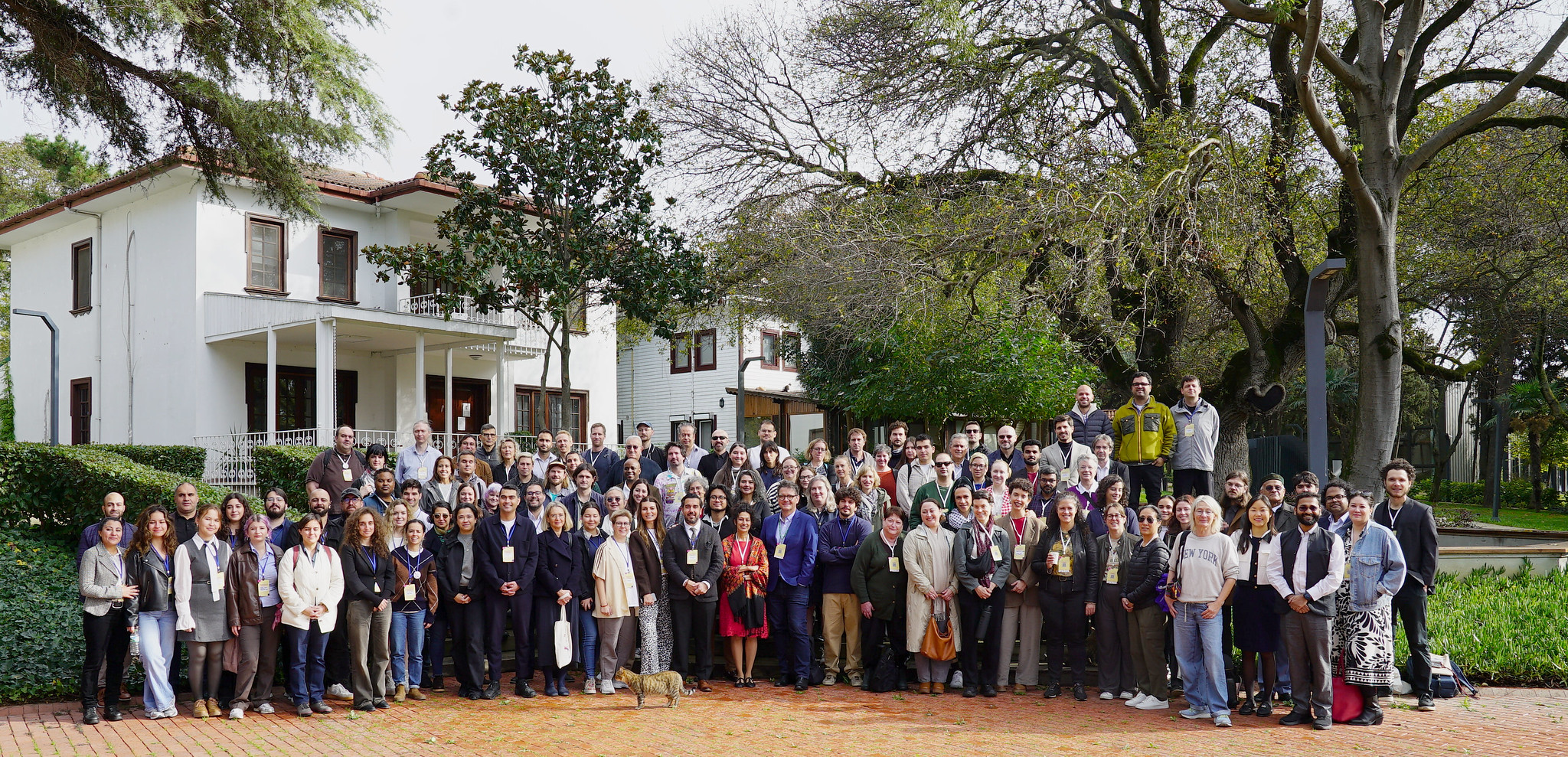
Since 2015, this community has been convening at annual conferences organized by the Platform Cooperativism Consortium. This organization, led by Trebor Scholz, professor at The New School and longtime advocate for worker-owned digital platforms, has held a global focus, hosting these gatherings across the globe: in New York City, Hong Kong, Berlin, Rio de Janeiro, India, Kenya, and now Istanbul.
Subvert traveled to Istanbul and attended as part of a panel, with our trip generously sponsored by the Center for Cultural Innovation – the same non-profit organization that supported our early work, including a fellowship that helped us design and print our first zine run.
These conferences have always centered discussion on how digital platforms can be owned and governed by the people who use and depend on them. But this year felt different. As the world is consumed with AI hype, this conference turned its focus to the intersection of artificial intelligence and online cooperativism.
Why AI and co-ops?
Before getting into what was discussed, it’s worth naming where many of us in the Subvert community stand on AI: skeptical at best, hostile at worst.
Generative AI music is widely considered slop. Bandcamp recently introduced a policy which bans AI-generated music. And the news keeps surfacing examples of AI companies like Suno training models by scraping copyrighted work without consent or compensation. Within music, the conversations about AI are particularly hostile. So where do the conversations around AI and cooperatives intersect?
We came with an open mind to hear from academic researchers and practitioners alike what they see in this intersection.
The Solidarity Stack
Trebor Scholz opened the conference by introducing what he calls the “Solidarity Stack” – a framework he developed with researcher Morshed Mannan for thinking about cooperative ownership across the entire AI supply chain.
“The AI crisis won’t be solved by laws or better code alone. It will be solved by people—by you—organizing across layers, borders, and disciplines. Across the stack.” – Trebor Scholz
The core idea he presented is that AI isn’t something that just exists at the code level. AI systems are produced by many layers: rare earth mineral mining for chips, data centers, human labor, data collections, algorithms, models, and apps. What Trebor outlined is a vision where each of these steps can be run as cooperatives, rather than controlled by a small number of corporations.
The Solidarity Stack asks: what if each of these layers could be cooperatively owned? What if there were cooperative mines, community-owned data centers, worker-owned AI development shops, and democratically governed applications?
It’s an ambitious, broad vision. And the realization of this vision feels distant and hopeful – bordering on impossible. But Trebor’s framework provides a useful map for seeing where intervention might be possible, and where the cooperative movement is already experimenting.
The hidden labor of AI
The conference opened with a screening of In the Belly of AI, a documentary directed by Henri Poulain and co-written by sociologist Antonio Casilli. The film traces the invisible human labor that powers AI systems: the data annotators, content moderators, and ghost workers scattered across the Global South who train models for a few dollars a day.
The movie illustrated that none of these AI models exist without exploited human labor.
“It depends on who owns it”
It was interesting that at this event, there was less overt dismissal of AI than we commonly see within Subvert’s membership. These researchers and practitioners shared a view that the root problem of AI exists within its capitalist business models, and less so within the technology
Transkribus, an AI tool for transcribing handwritten historical documents, must be one of the most successful cooperative platforms today. The platform has over 300,000 registered users, has processed more than 100 million pages of historical documents, and is co-owned by 237 members from 35 countries. It even won the European Union’s Horizon Impact Award in 2020.
Transkribus got started within academic research projects funded by the European Commission to read handwritten texts. The research that created this tool became valuable and useful enough that people around the world wanted to use it, and a community and business formed around it. When the EU funding ended in 2019, they transitioned into a cooperative rather than selling to a larger company.
Melissa Terras, a professor at the University of Edinburgh and director of its Centre for Digital Scholarship, spoke about how the cooperative has operated for years, resisting acquisition offers and maintaining democratic governance.
Professor Terras had this to say about AI:
“AI is just lines of code. It depends on what we point it at and who owns it.”
Her argument is that the problem isn’t the technology – it’s the business models. Cooperative structures are alternatives to extractive business logic.
AI optimism: can it be a “labor commons”?
Marcelo Vieta, a professor at the University of Toronto who studies worker cooperatives and self-management, offered the most optimistic talk of the conference. He said,
“We built these systems. We can redirect them. Or slow them down and re-design them.”
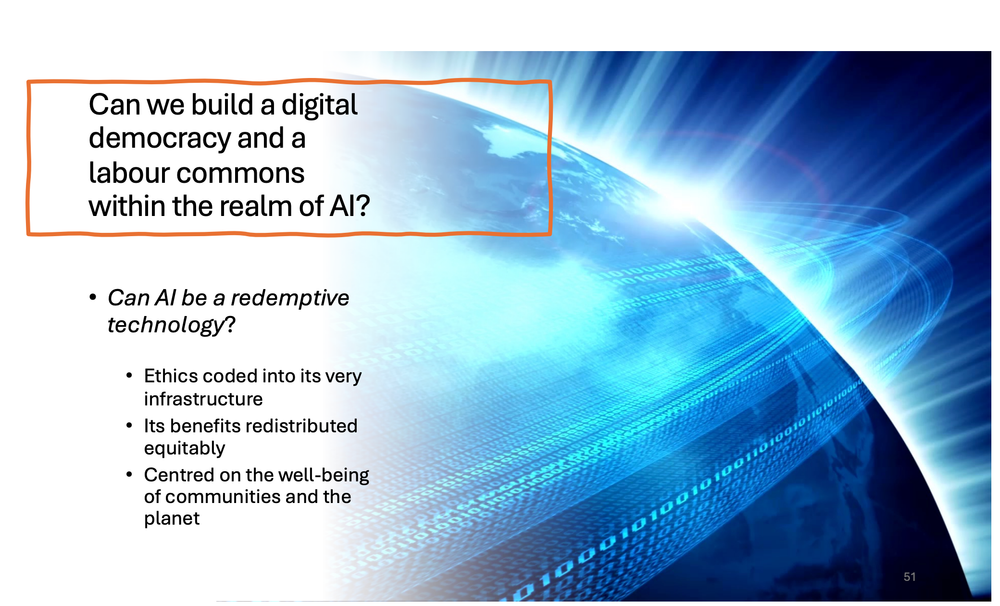
Vieta suggested that AI can become part of a “labor commons” – allowing AI, data, and algorithms to be shared resources collectively governed by workers, instead of commodities extracted for profit. He pointed to The Drivers Cooperative in New York as an example: the tech is similar to Lyft and Uber, but the ownership and governance are entirely different.
His point wasn’t that we should seize existing AI infrastructure. It was that we can build alternatives from the ground up. Or as he put it:
“recoding architectures, data practices, and incentive structures around human scale and ecological limits.”
He asks:
Can AI be a redemptive technology?
However, it’s worth noting that when an audience member inquired whether any architects of the dominant AI systems were in the room, they weren’t. To me, some of the optimism was dampened by this feeling that a group of researchers and academics were raging against the machine halfway across the world from San Francisco, while the AI architects we were raging against were neither present nor aware that this conversation was happening.
Cooperatives in practice
I shared my panel with Stuart Fulton, who runs PescaData, a data platform used by small-scale fishing cooperatives in Mexico to share information with each other. PescaData is worlds away from the traditional Silicon Valley tech world, so it’s refreshing to see smaller scale platforms from Latin America be represented. I appreciate the curation of Trebor Scholz, who has continued to extend a global lens to these events, making sure not to create a US-centric echo chamber of discourse.
Hypha Worker Co-op, based in Toronto, presented RooLLM. Roo is the name they gave their own internal, self-hosted AI tool which helps the workers within their cooperative coordinate by making internal company data and insights more accessible, and even support their own governance. It’s a small but real example of what it might look like for a cooperative to run AI infrastructure on its own terms. No reliance on OpenAI or Google. And no replacing jobs. Just experimenting with ways to empower worker-owners within a co-op.
Felix Weth, CEO of Platform21, made the case for cooperatives to invest in building shared compute infrastructure. He argued that without access to processing power, cooperative AI will always be dependent on the very corporations it hopes to challenge. His call to action: build the world’s largest collectively owned compute cluster.
Research vs Practice
In a world of very well-placed tech cynicism, there is something nice about being in a room with optimistic and hopeful tech nerds. I first attended a Platform Cooperativism Conference in 2019, in New York City. Back then, there was an energy that I found to be contagious. The people there wanted to build cooperative replacements for Facebook, Google, everything. The optimism was real.
Six years later, some things have changed. It’s true that platform cooperatives have made progress, but the ambition of the early days has dampened. Transkribus shows that there are real successful examples in practice today. That’s real progress. Still, I couldn’t help but feel some disappointment by the imbalance of the discourse.
There weren’t enough practitioners centered in the discussions I heard. Researchers and academics far outnumbered people who had actually started or were running cooperatives. The conversations often felt like observing rather than participating. There were more people studying the possibilities of a movement rather than picking up a shovel.
This isn’t necessarily the fault of the conference organizers. The Platform Cooperativism Consortium has roots as an academic organization, after all. But if the cooperative movement is going to matter in the AI era, the discourse needs to be reclaimed by people in the arena.
I have always felt that the health and success of the platform cooperativism movement is contingent on moving it away from the world of dry academic PDFs and research – and bringing the ideas to life through real, successful, consumer tech applications. But the space is largely still firmly planted in academia.
Whenever I am at a platform cooperative event, I can’t help but compare it to traditional tech events like TechCrunch Disrupt, where founders, funders, and journalists are centered in conversation. Say what you want about the traditional tech world – it’s organized around people building things. And I think the cooperative movement needs more of that energy. More praxis to balance the theory.
Maybe the answer is for practitioners like Subvert to organize our own convenings, bringing together the people actually running cooperatives and creating space for the conversations we need to have. Less theory, and more practical examples of artists joining together to create their own worlds and systems.
Continued Work
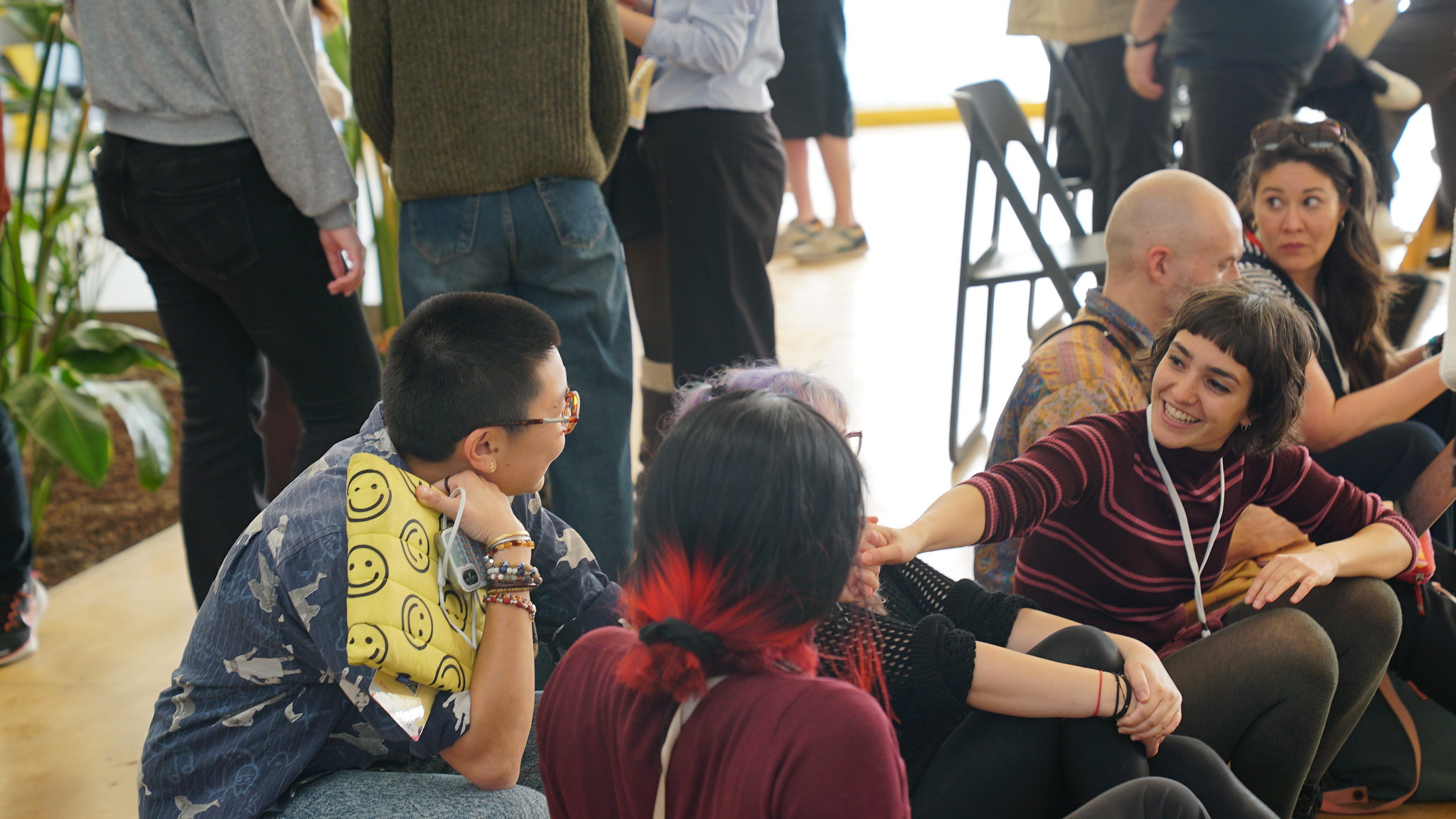
Despite my critiques, there was something energizing about being in a room with people from thirty countries, all trying to figure out how to build something different.
One of the things that I loved was hearing genuine enthusiasm from many of the conference participants about what Subvert is doing. It was a reminder of the potential for impact we can have – through demonstrating our ability to be commercially successful against a legacy incumbent.
And it’s also a reminder that there is room for developing our own positioning on AI as it relates to our cooperative. This is an invitation for everyone reading this: we’re currently co-creating our own AI policy in the Subvert forum. If you haven’t weighed in yet, now’s a good time.
The questions raised in Istanbul about who owns and controls AI mirror Subvert’s questions about who owns and controls music platforms. These questions will only become louder. And the answers will be shaped by those who get in the arena and participate.

Explore Early Insights from the Copyright Claims Board (CCB)
A new federal copyright tribunal launched in 2022. Stanford Law students analyzed over 1,000 cases. Learn who is using the CCB, why dismissals dominate, and how creators might better navigate the system.
In 2020, Congress passed the CASE Act calling for the creation of a new copyright tribunal—the Copyright Claims Board (CCB). The CCB was launched by June 2022, giving creators a new forum where they could assert their copyright claims. This tribunal was designed to be affordable, fully online, and simplified compared to its analog in federal court. The CCB also maintains a public docket of its cases, inviting analysis into its trajectory so far. It’s rare to witness the development of a new forum live and actually have the information to explore how it has been working. As students in the Juelsgaard Intellectual Property and Innovation Clinic at Stanford Law School, we scraped the CCB’s data with several research questions in mind.
Within the first year of the CCB’s launch, the data revealed that few cases reached final determinations and over 70% of claims were dismissed. We were curious about why this was, and whether this still held true after a few years. Which creators filed claims with the CCB? Were there clear patterns in the effect of representation on case outcomes? What were the reasons claims were dismissed, and could creators use this information to prepare claims that are likely to succeed in the future? Guided by questions about who the CCB serves and why, we investigated cases in the CCB’s docket from its start in June 2022 through January 1, 2025. Our findings are summarized below.
Few Cases Reach Final Determinations
- Of more than 1,000 cases in CCB’s docket, only 18 cases, or 1.8%, reached a final determination. To reach this stage, a case must be properly filed, clear the CCB’s compliance review, meet service requirements, and of course, reach a determination on the merits of the case. Some cases are dismissed before this point for several reasons, which we will cover later.
- A number of repeat claimants reached final determinations in at least one of their claims. Julie Dermansky, Joe Hand Promotions, and Michelle Shocked have each filed more than 10 claims with the CCB and each has reached a final determination for at least one of their claims.
- Among final determinations where the claimant prevailed, the damages awarded ranged from $1,200 to $7,000.
- Claimants and respondents in cases that reached final determination varied and ranged from individuals to well-known corporations. Claimants also sought to enforce protections of several types of works, including songs, photographs, university assignments and paper prompts, novels, videos and more.
- It is unclear whether certain types of claims, claimants, or works are more likely to reach final determination than others. However, what is clear is that the chances of getting to this stage have been slim, even for those who are more experienced with the CCB’s process.
The Majority of Cases are Dismissed
- Dismissal is the modal outcome for cases filed with the CCB, though dismissal can occur at several stages in a proceeding. As these dismissals are most often without prejudice, parties can still re-file their claims after dismissal if they choose to.
- The most common reason for dismissal is failure to timely or properly amend a complaint. This happens when a complaint does not meet the CCB’s requirements during early screening. After claimants file their claims, the CCB reviews them (in a phase called “Compliance Review”) to surface issues. The CCB alerts claimants of these issues and asks claimants to amend their complaint within a given period of time to fix them. These issues vary, but include missing information in the claim, failure to pay fees, missing copyright registration (when required), use of the claims process against someone who does not reside in the US, or use of the CCB for claims the tribunal cannot preside over (e.g. contract disputes related to copyright licensing). Sometimes, parties did not file amended claims at all after being notified of issues, resulting in dismissal. In other cases, claimants did amend their claims, but those amended claims still did not pass compliance review after two rounds of amendments. If the amended claim still presents issues after the second opportunity to amend, the CCB will dismiss it.
- The second-most common reason for dismissal involves issues with providing service, including failure to file proof of service and ineffective service. While the CCB’s proceedings are relatively streamlined and simplified, rules of service come from a different authority: the respondent’s applicable state law. Service can be more difficult to navigate than other stages of a CCB proceeding for this reason, and the service rules can vary by state.
- Close behind is dismissal because the respondent opted out of the case. It may seem unsurprising that a respondent would choose to opt out of a case, however, claimants are also able to drop out which was the fourth common category of dismissal types. These trends in dismissals stayed relatively stable across 2022-2024. While it is not possible to tell why claimants request to dismiss their own cases, it may be the result of settlements the parties have reached outside the CCB or their choice to use federal courts to resolve the issue instead.
Demographics and Dismissals
- Effect of Representation. Most cases that were not dismissed involved a claimant and a respondent who were both not represented by counsel. It is not clear that claimants are more likely to be successful in reaching a final determination if they retain counsel.
- Status of Party. Of the cases that were dismissed, it was more likely that both parties were individuals. In general, the majority of claimants and the majority of respondents are individuals—significantly fewer are corporations, LLCs or other entities (e.g. nonprofits or government entities).
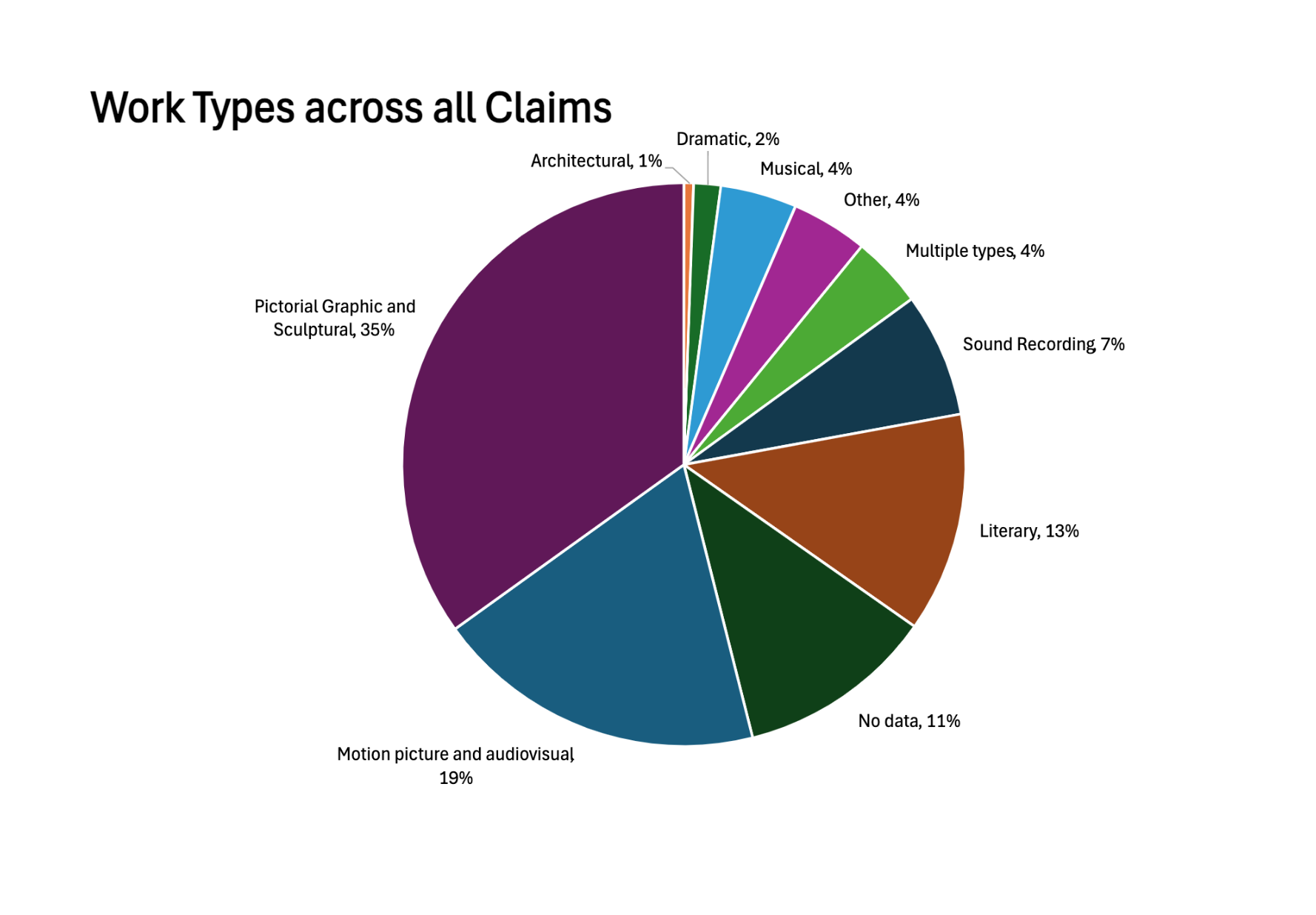
- Work Types. Of the cases that were dismissed, most claims involved pictorial graphic and sculptural works. The chart below shows the demographic breakdown of work types across claims that were dismissed. The highest number of dismissals involved claims for pictorial graphic and sculptural works. However, the percentage rate for dismissals of claims involving musical work types (94%) was higher.
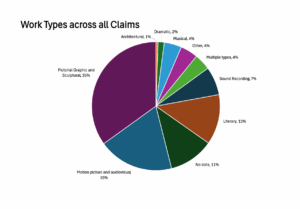 In general, claims covered a variety of work types, but the most common were pictorial, graphic, and sculptural works. We generated this pie chart based on data from June 2022 (when the CCB began to accept claims) to January 1, 2025.
Claimants and Respondents
With the data that was collected, we were able to see where claimants were actually located, and we found that most domestic claimants were located in California. New York, Texas, Pennsylvania, and Florida also had a large number of claimants. Outside of the US, the top countries represented were the United Kingdom, Ukraine, Germany, and Canada.
Some parties appeared in front of the CCB as a claimant in one case and later again as a respondent in a different, unrelated case. There were some parties, for example, who were respondents in a claim in 2022, and then appeared as claimants in 2023 or 2024. There have been a handful of claimants who have brought more than 10 claims to the CCB in the past couple of years, and similarly there have been a handful of respondents involved in more than 10 cases in front of the CCB in the past couple of years.
A large number of these repeating respondents are platforms such as YouTube, Amazon, and Etsy. In these cases, the claimant was generally not represented by counsel, and every case against a content service provider was dismissed. Still, the fact that these claims were dismissed does not necessarily mean that the claimant was unsuccessful. Some claimants brought claims against a platform to have someone else’s infringing content, which was hosted on the platform, taken down. Claimants can only bring a claim against an online service provider if it loses its safe harbor under Section 512 of the Copyright Act. Online service providers gain a safe harbor by providing a platform for handling takedown notices and handling requests in a timely manner, as outlined by Section 512. If a claimant files a takedown notice with a platform for potentially infringing material on the platform, the alleged infringer can file a counter notice. The online service provider may choose to reinstate the content while waiting for the claimant to bring formal legal action. It is usually in these situations where a claimant brings an erroneous claim against the platform as opposed to the infringing author. The CCB has no obligation to a claimant who brings a misrepresentation claim against a platform if the platform still has safe harbor—the actual conflict is between the author of the infringing content and the claimant. In addition, even if the platform lost its safe harbor, it can still choose to opt out of the CCB proceeding.
Learnings and Ethical Considerations: A Resource for Arts Funders on Artificial Intelligence
Learnings and Ethical Considerations: A Resource for Arts Funders on Artificial Intelligence
A helpful resource for funders interested in moving ethically in the Artificial Intelligence (AI) space
As Artificial Intelligence (“AI”) transforms various sectors, it is crucial to evaluate both the pros and cons of AI-integrated projects. As arts’ funders, it is our duty to safeguard human creativity, ownership rights, and data privacy for creators and cultural communities in grantmaking processes.
Research to Impact Lab staff designed a workshop for the 2024 Grantmakers in the Arts' Support for Individual Artists Preconference: The Future is AI? Equipping Artists for the Digital Renaissance.
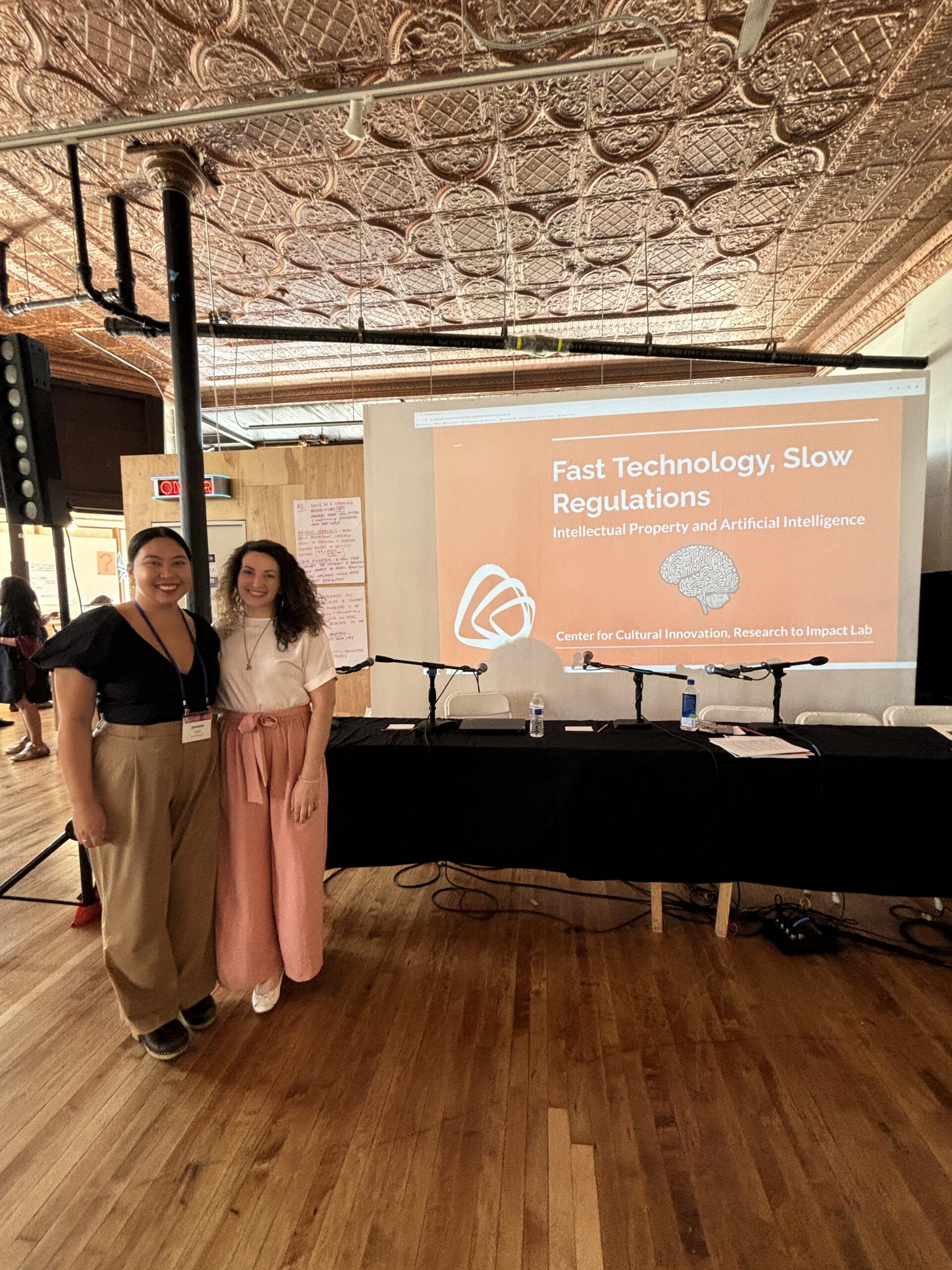
The R2I Lab’s workshop, Fast Technology, Slow Regulations: Intellectual Property and Artificial Intelligence, featured a discussion on current AI regulations as well as the ethical and social implications amid rapid technology adoption and limited data protection measures.
The workshop featured tangible and immediate protections that funders can support to address artists' intellectual property concerns and offered strategic possibilities for funders interested in supporting more structural changes impacting individual artists and vulnerable communities.
The workshop finished with a hands-on activity where funders could practice intentional discovery and due diligence on a project involving AI technology.
This resource expands on the workshop content, providing a comprehensive list of due diligence questions and implementation strategies for arts funders evaluating AI-integrated project proposals.

Navigating the Copyright Claims Board: A Practical Guide for Creators
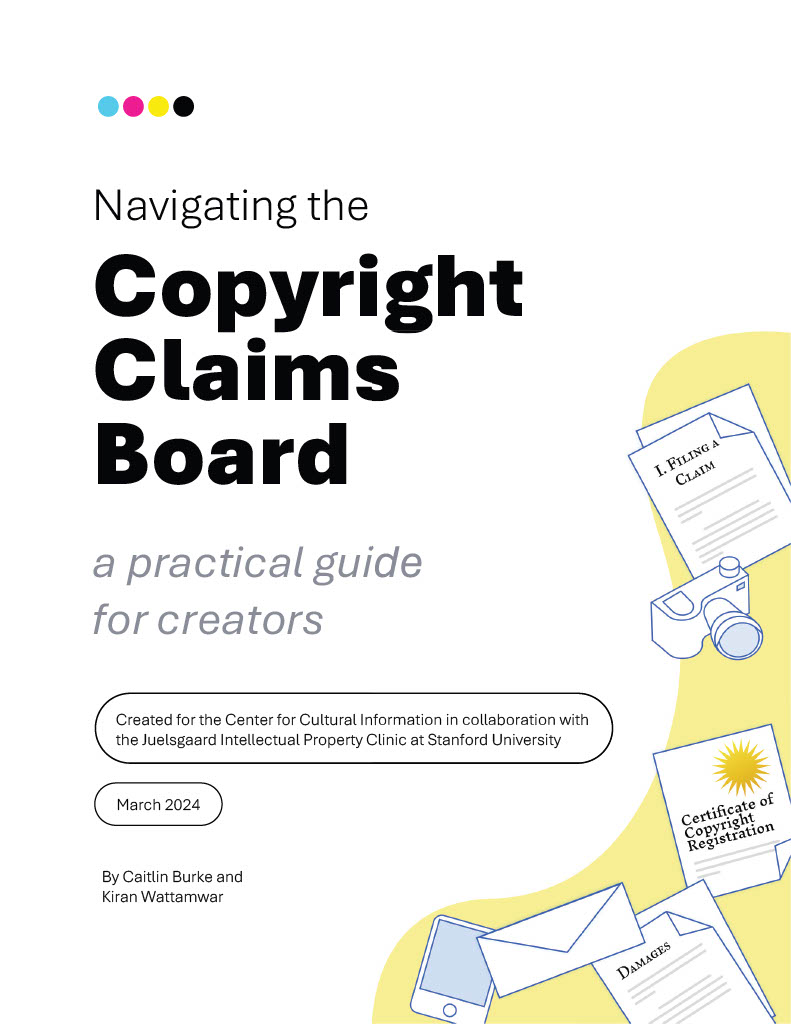
Navigating the Copyright Claims Board: A Practical Guide for Creators
A guide for creatives to better understand the Copyright Claims Board (CCB). This resource was created through a partnership between The Center for Cultural Innovation (CCI) and Stanford University's Juelsgaard Intellectual Property and Innovation Clinic (JIPIC)
Thank you so much for sharing your story! We will use these examples to shape our advocacy, research, and resources on this topic, and may reach out to you for more information, or to let you know about opportunities to advance social and economic protections for all.
Navigating the Copyright Claims Board: A Practical Guide for Creators would not have been possible without the support of the William & Flora Hewlett Foundation and the Kenneth Rainin Foundation

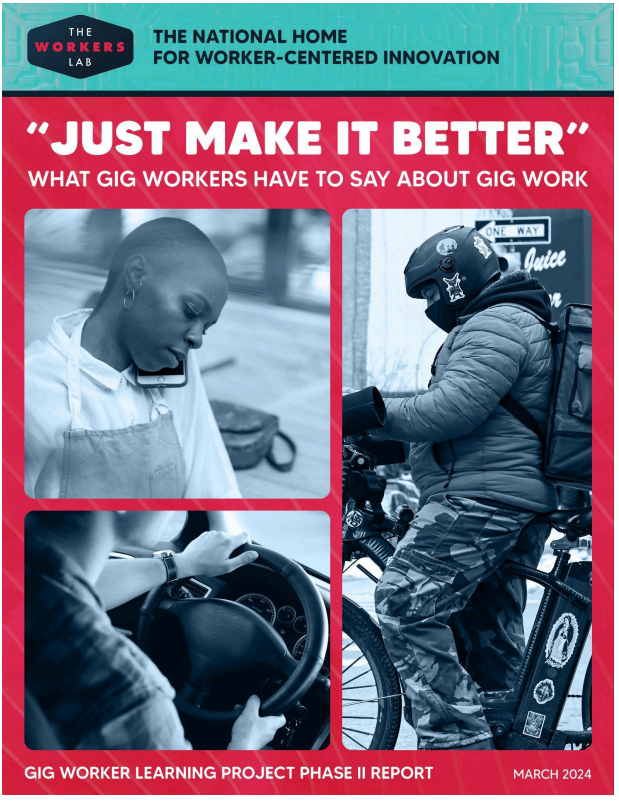
Gig Worker Learning Project: Phase Two Report
Gig Worker Learning Project: Phase Two Report
"Just Make It Better." What Gig Workers Have to Say About Gig Work
The Gig Worker Learning Project is a valuable resource for anyone seeking to better understand gig workers and the challenges they face.
Supported by CCI, led by The Workers Lab, and developed in collaboration with the Aspen Institute Future of Work Initiative, “Just Make It Better. What Gig Workers Have to Say About Gig Work” is a unique new piece of research on “gig” work, co-authored by active gig workers as participant-researchers. The goal of this project is to better understand gig work and workers directly from gig workers themselves, regarding their motivations, challenges, and solutions that would impact their lives personally and professionally.
Arts Worker Supports Issue Brief
Arts Worker Supports - Issue Brief
A summary of the public policies needed to build economic security for arts workers and microbusinesses
We worked with arts advocates to define a policy agenda that supports arts workers and microbusinesses.
In Spring/Summer of 2023, we worked with a voluntary group of arts worker advocates through the Cultural Advocacy Group to identify a set of policies needed to support the economic security of arts workers and microbusinesses. This issue brief is the result of our collective effort.
The brief summarizes the challenges people working in the arts face to access social protections, both as independent workers and microbusinesses, and outlines a series of policy reforms needed to build a safety net for all.
The brief is meant to be a resource for the field, so please feel free to use it in your own advocacy!